



Notice

BACK TO LIST
Event Recap: Sexual and Domestic Violence Prevention – Film-Based Case Discussion and Cross-Cultural Dialogue
- Name인권센터
- Date2026-10-29 13:17
- Hit213
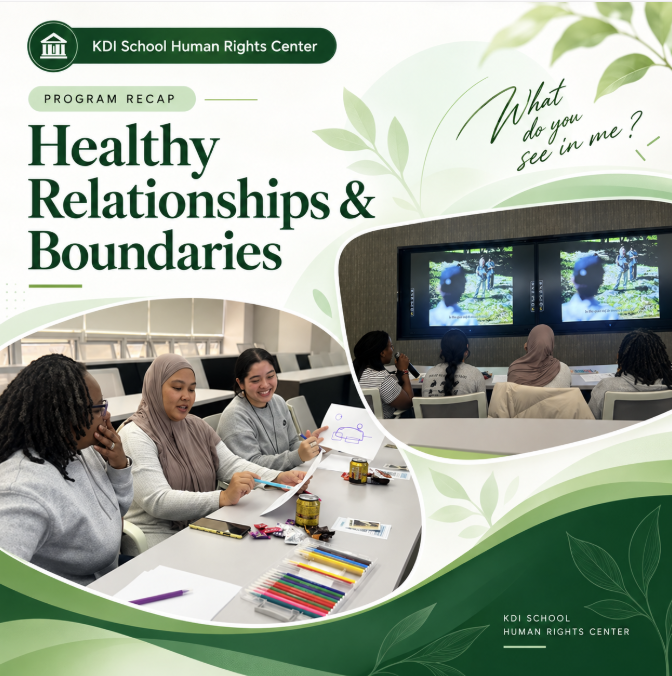
The KDI School Human Rights Center successfully held the “Sexual and Domestic Violence Prevention: Film-Based Case Discussion and Cross-Cultural Dialogue” session on October 28, from 1:30 p.m. to 3:30 p.m., with 4 students participating. The Human Rights Supporters also assisted with the preparation and operation of the session.
The session combined human rights education with an engaging film-based case discussion. The initial training focused on the broader principles of human dignity, exploring how an apparently ordinary interaction can be experienced differently depending on a person’s prior experiences and sense of safety. Participants learned about the importance of voluntary and ongoing consent, and examined various forms of power and control in relationships, including emerging technology-facilitated abuse such as digital stalking and AI-generated deepfake imagery.
During the film-based case discussion, participants engaged in an in-depth analysis of the characters' actions and the psychological impact of digital sexual crimes. The group empathized deeply with the anxiety and isolation of the victim, while critically debating the danger of boundary violations disguised as romantic feelings. Furthermore, the discussion addressed the "bystander's dilemma" and societal double standards, emphasizing that non-consensual recording is a severe violation of privacy regardless of gender.
Following the film, students shared their own perspectives on how expectations surrounding intimacy, communication, and digital privacy differ across communities. Through this cross-cultural dialogue, participants recognized that while cultural contexts shape social norms, coercion or disregard for consent can never be justified by tradition.
At the end of the session, participants shared suggestions for building a safer KDIS community. Key takeaways included practicing proactive communication, recognizing psychological and digital harm, respecting each person’s autonomy and boundaries, and providing safe, nonjudgmental support for peers experiencing concerning behavior.
The Human Rights Center plans to continue offering ongoing education on violence prevention and case discussion seminars to enhance students’ human rights awareness. We look forward to your continued interest and participation in future sessions as we work together to build a safer, more respectful, and inclusive KDIS community.