

NEWS

BACK TO LIST
Recalibrating the measurement of development World Happiness Report
- Date 2015-08-01 08:35
- CategoryResearch and Education
- Hit2129
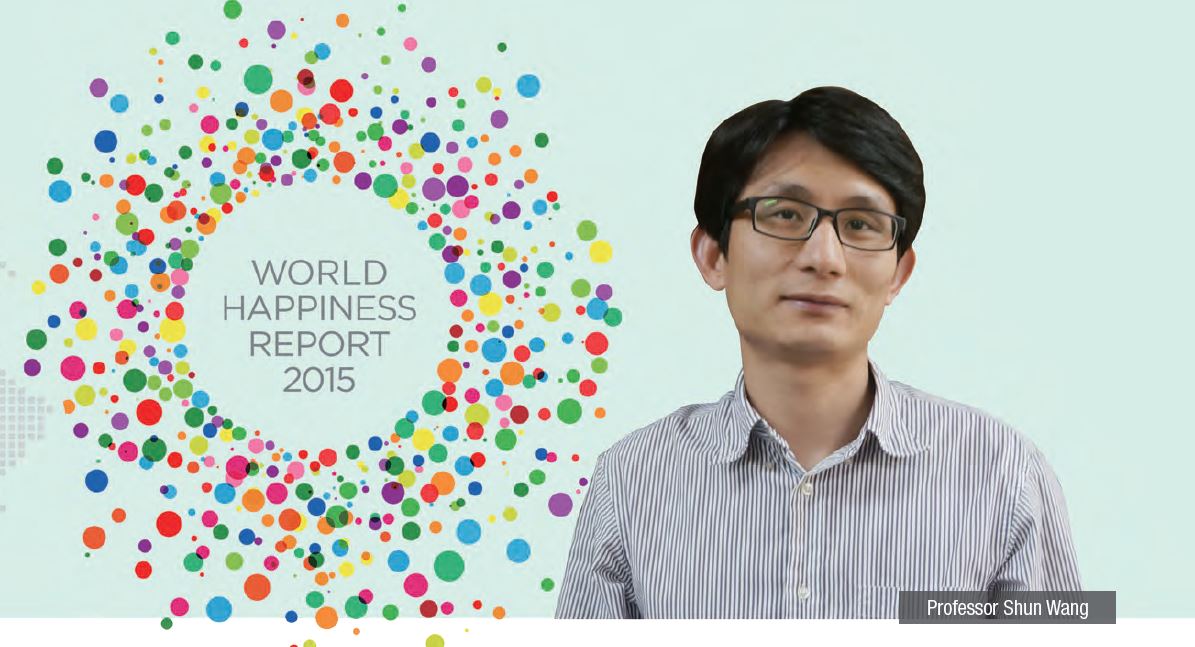
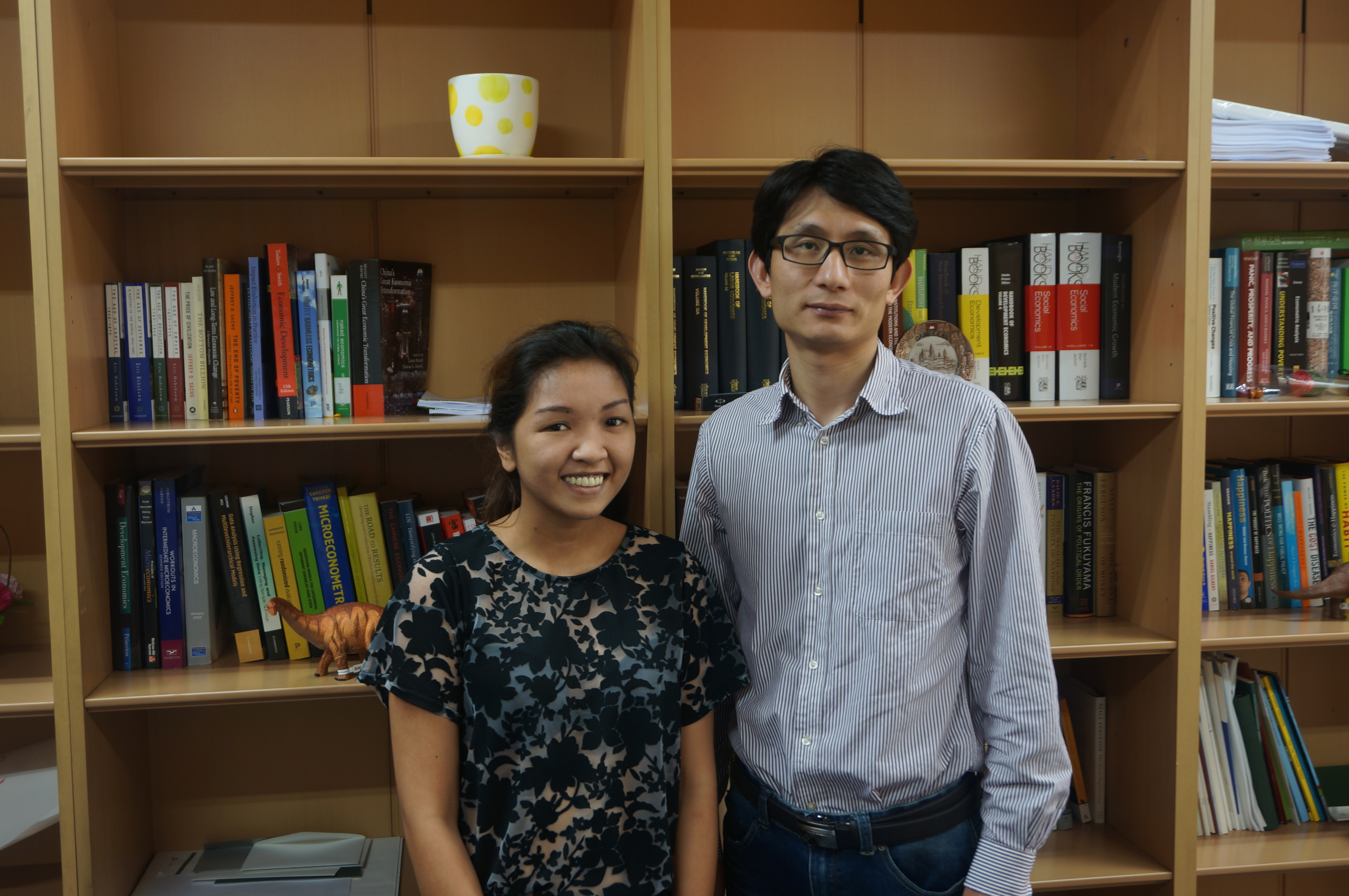
The third World Happiness Report, released in April 2015, once again made waves internationally. Published by the Sustainable Development Solutions Network, it is co-authored by the KDI School’s Professor Shun Wang. Professor Wang, whose areas of expertise include subjective well-being, became a part of the team through his work with Professor John F. Helliwell at University of British Columbia. The Globe sat down with him to gain further insight about the report.
Defining Happiness
There have been challenges about accepting happiness as an appropriate measure of development. Most of them stem from defining happiness as an emotion rather than as a measure of well-being. By measuring happiness mainly by Cantril ladder (or Cantril’s Ladder of Life Scale), the report goes beyond using just GDP per capita as a measure of utility. The survey question for Cantril ladder is “Please imagine a ladder with steps numbered from zero at the bottom to ten at the top. The top of the ladder represents the best possible life for you and the bottom of the ladder represents the worst possible life for you. Which step comes closest to the way you feel?” It avoids placing pre-defined weights on elements of happiness like education and health (as used in Human Development Index, HDI), because it recognizes that individuals will place importance on these elements differently. Moreover, subjective well-being can also reflect the importance of non-material aspects of life such as social support and trust. Professor Wang acknowledges that there has been some distrust of subjective measures, but he contends that subjective data are proved to be reliable, can be measured and compared objectively.
Professor Wang further elaborated on the importance of looking into subjective well-being particularly for policy making, citing the misery index as an example. The misery index uses the same weight for measuring inflation and unemployment, but a study found that the impact of an increase in unemployment is larger than an increase in inflation. In fact, people would be willing to trade “1 percentage-point increase in the unemployment rate for a 1.7 percentage-point increase in the inflation rate.
Surprising Findings
One of the key arguments against a global ranking of happiness is that it will be a transitory measure.
The findings of the report show significant difference in life evaluations among countries with the difference being largely explained by life circumstances. Within countries, the differences are also apparent, which shows that rapid and complete adaptation does not really happen.
The report validated some theories, like for instance, that Scandinavian countries, which have been ranked high in a lot of development rankings also proved to be the happiest. The United States, despite having a relatively high income placed lower than what their income suggested.
Another interesting finding of the report was happiness in the regional differences. Latin American countries, having comparable income to Eastern European countries, were found to be happier than their economic counterparts.
The report, as a consistent complementary measure of development, has important implications on policy making. It is a significant data analysis that will help policy makers ensure more balanced and sustained development.
The complete report can be accessed at: http://worldhappiness.report/
By Marjorie San Pedro (2014 MDP, Philippines)
TAG
#Research
Related News
-
Research and Education 2026-09-03
Republic of Korea Economic Bulletin, September 2026#KDI #Economic #KDISCHOOL #kdischool #Economic Bulletin #Research
-
Research and Education 2026-08-04
Republic of Korea Economic Bulletin, August 2026#KDI #Economic #KDISCHOOL #kdischool #Economic Bulletin #Research
-

Research and Education 2026-07-06
Republic of Korea Economic Bulletin, July 2026#KDI #Economic #KDISCHOOL #kdischool #Economic Bulletin #Research