

NEWS

BACK TO LIST
KDI School-World Bank-Chinese Academy of Governance Policy Forum
- Date 2017-12-01 08:08
- CategoryResearch and Education
- Hit2682
KDI School-World Bank-Chinese Academy of Governance Policy Forum : Reducing Poverty and Inequality
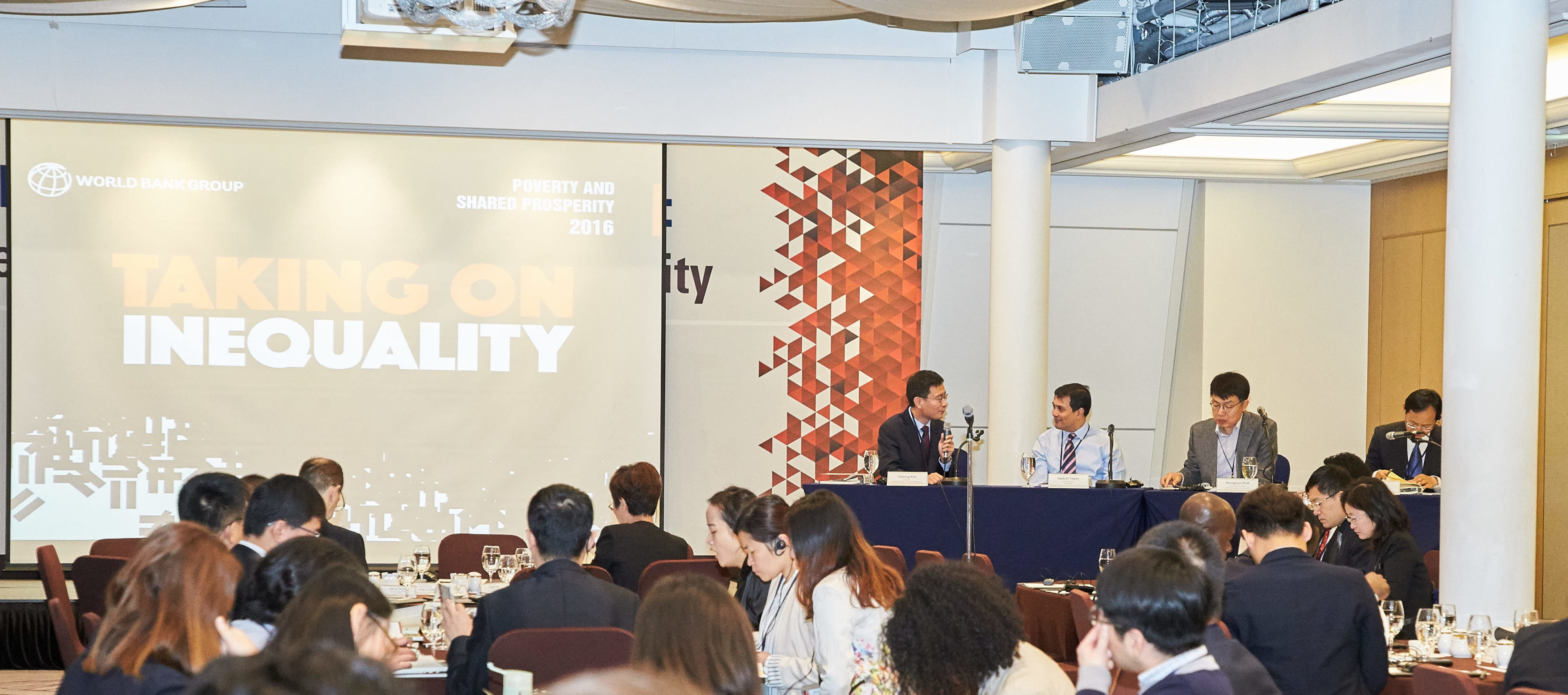
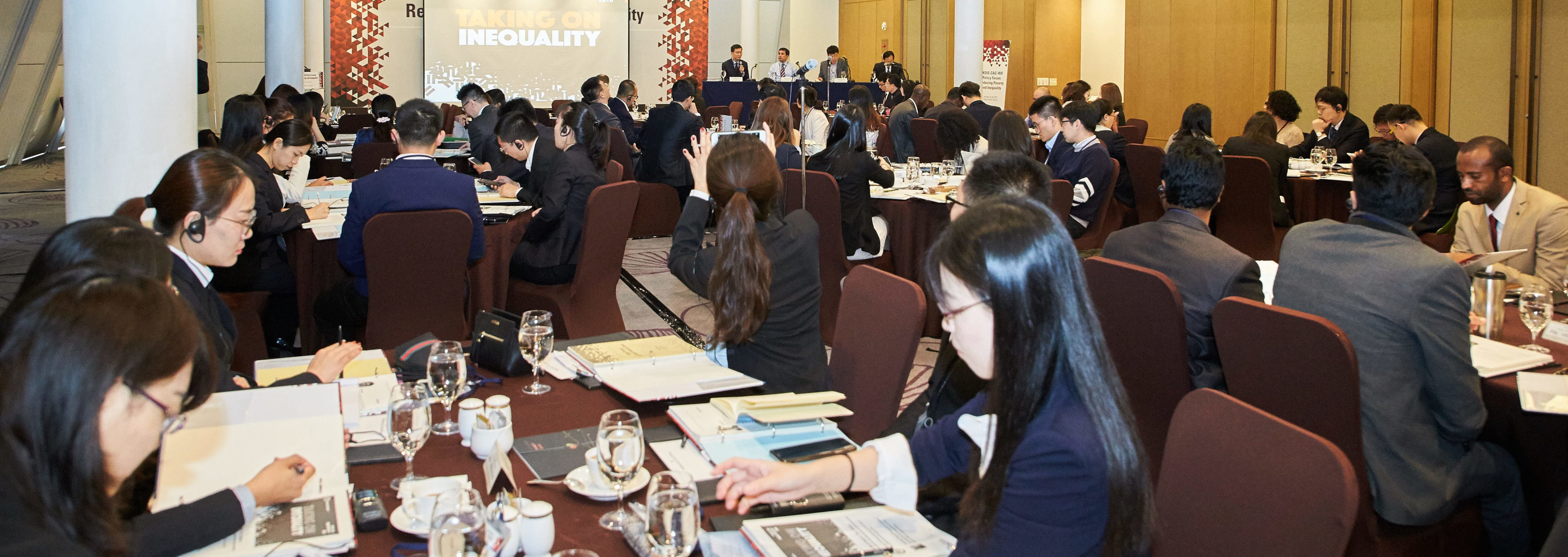
Since the decline of hierarchical decision making and the emergence of networks as a new form of political and technocratic governance, policy forums have emerged in the academic landscape. Against the increasing complexity and fragmentation of public policy making, policy forums are here to facilitate the coordination among authorities, interest groups, and academic experts. By providing a space for interaction, policy forums aim for horizontal, rather than vertical, integration of ideas and approaches.
At the end of October 2017, 32 students were selected through a competitive process to represent KDI School at the joint World Bank, Chinese Academy of Governance (CAG) and KDIS Policy Forum. The overarching topic of the seminar was to discuss the key issues of reducing poverty and inequality. Poverty is at a worldwide decline despite underperforming economies. However, there are still millions of people living in relative poverty and extreme poverty. This is what led many development experts to understand that the new agenda for eradicating poverty by 2030 would be a difficult task that requires much planning and specialized implementation. Additionally, reducing high inequality will also become necessary as we proceed toward implementing the United Nations Sustainable Development Goals. Therefore, this forum was designed to help current and future policy makers to think strategically for deliberate and tactical decisions to combat high inequality and balance opportunities. The Forum brought together leading experts from KDI School, the World Bank, and the Chinese government. The main aim of the event was to increase the understanding of the underlining issues and challenges of effective poverty and inequality relief as well as to discuss policy options available to decision-makers in various sectors of the government. The themes explored during the course of the high-level policy forum were based on research and country case studies tailored to address the leading issues and challenges in both South Korea and China, as well as potential lessons for representatives of other nations present at the event.
As compared to other collaborative structures, policy forums have a number of distinct features: they have organizational boundaries between the forum and the outside issue network, give rise to repeated interaction, include diverse members without serving a single interest, and deal with political and societal issues. The first day of presentations were started off by Prof. Taejong KIM (Development Research Center, KDI School) who applauded the interest of students to participate and take part in the global discussion on poverty and inequality reduction. Following him, Mr. Darren DORKIN (Acting Special Representative, World Bank Group Korea Office) presented his conviction on the realistic chance of combating these societal issues within our lifetime if decisive and sustainable measures will be implemented. Finally, the Opening Remarks were closed off by Ms. Song ZHANG (Deputy Dean, Graduate School, CAG) who wished everyone a productive event.
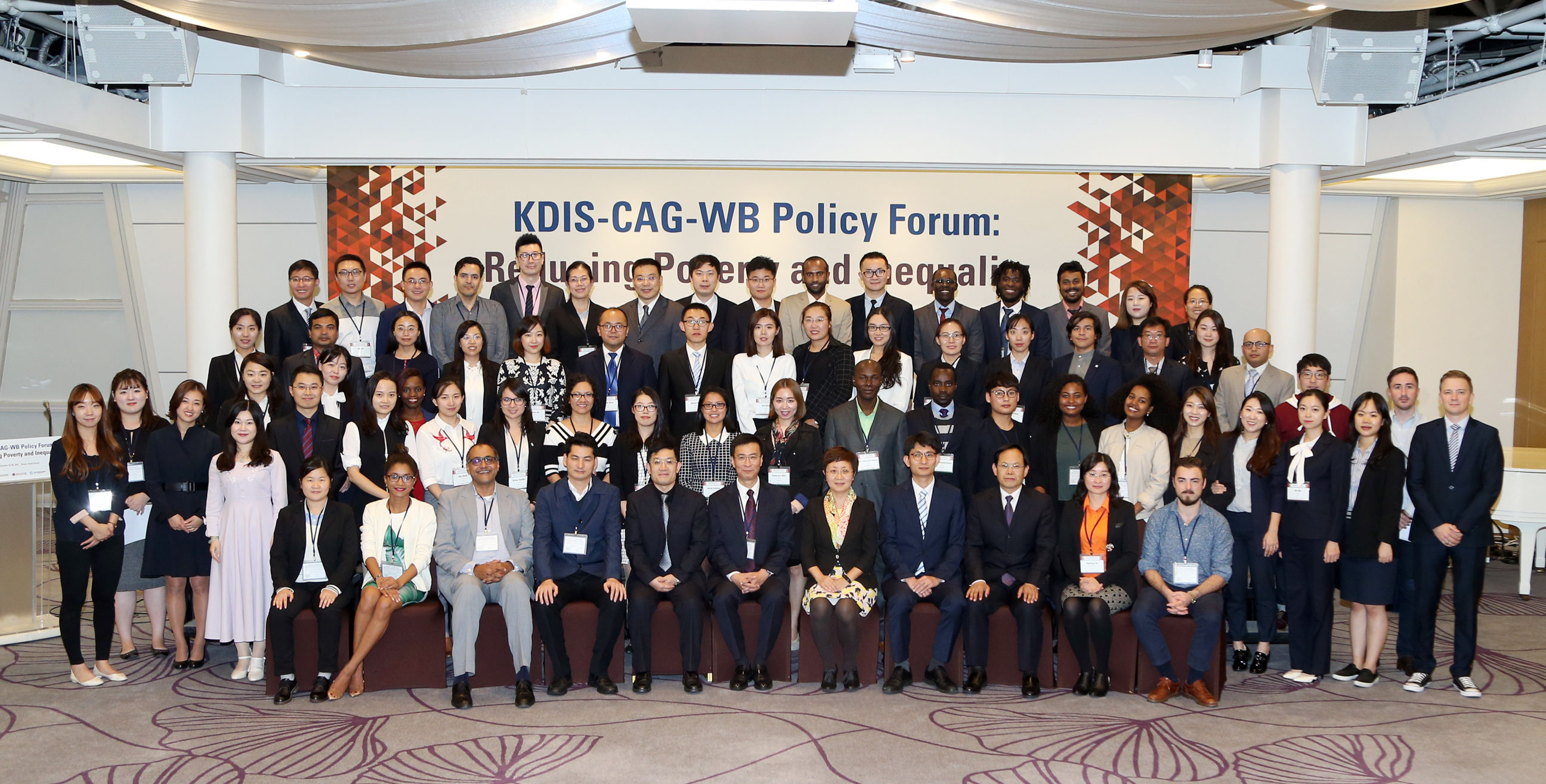
The 2-day event was characterized by an inclusive network opportunity for policy actors dealing with poverty and inequality issues. The result was a special flavor of network governance that brought about insights on how different parts of the world are dealing with the issues discussed. Reducing poverty and inequality are two important socioeconomic policy objectives for most of the world’s countries, and is no exception for South Korea and China. Even though China has made remarkable progress in reducing poverty since its overarching reform and opening-up from 1978, it still faces millions of impoverished rural citizens living below the national poverty line. Along with the rapid economic growth, China has also experienced widening income inequality due to stark income differences between rural and urban societies, and improving social safety nets for the bottom becomes more important to ensure social stability of China. South Korea also faces the issue of rising relative poverty, where it has increased from about 8% in the early 1990s to the current 15%. South Korea now has the highest elderly poverty rate among members of the OECD, where nearly half of Koreans aged 65 or above live below the poverty line. Moreover, Korea’s inequality level has increased posing challenges to the economy, which economists state that it will ultimately not only hurt the low-income group but also the middle and upper classes.
At this year’s annual KDI School-World Bank-CAG Policy Forum participants got a unique opportunity to consider approaches to social protection and explore the extent to which, and the conditions under which, social protection programs can help reduce poverty and inequality. These out of class events cover beyond theoretical knowledge and are a refreshing opportunity to learn from the experience of professionals that already take part in important battle against poverty and inequality.
By Tracy Amanda SMITH (2017 MPP, Guyana), Valentin CROITORU (2017 MPP, Moldova)
TAG
#Conference
#Research
Related News
-
Research and Education 2026-11-04
Republic of Korea Economic Bulletin, November 2026#KDI #Economic #KDISCHOOL #kdischool #Economic Bulletin #Research
-
Research and Education 2026-10-13
Republic of Korea Economic Bulletin, October 2026#KDI #Economic #KDISCHOOL #kdischool #Economic Bulletin #Research
-
Research and Education 2026-09-03
Republic of Korea Economic Bulletin, September 2026#KDI #Economic #KDISCHOOL #kdischool #Economic Bulletin #Research